
Quick answer
A CCTV drain survey isn't legally required when buying a house, but it is often worth it in London. Standard building surveys don't usually inspect inside the pipes, so cracks, root ingress or collapses can go unnoticed. It is especially worthwhile for Victorian and Edwardian homes, houses near large trees and properties with extensions.
Key takeaways
- A CCTV drain survey is optional but can reveal defects a building survey won't.
- It is most worthwhile for older homes, houses near trees and homes with extensions.
- The report shows the condition of the pipes, any defects and where they are.
- Findings can help you negotiate or ask the seller to carry out repairs.
- Book it before exchange of contracts so you can still act on the results.
Do you need a CCTV drain survey when buying a house?
You don’t legally need one, but a CCTV drain survey is often a sensible extra check, particularly for older London homes. It is the only practical way to see inside the underground pipes before you commit to buying.
Most homebuyers rely on their mortgage valuation or a building survey. These are useful, but they focus on the structure of the house. Surveyors don’t usually send a camera into the drains, so problems underground can stay hidden until after you’ve moved in.
What is a CCTV drain survey?
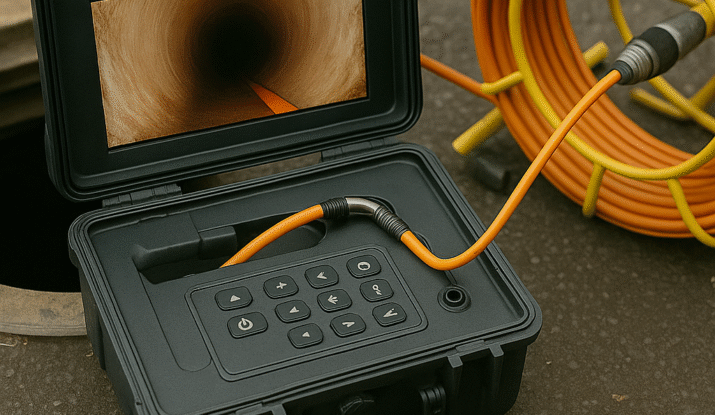
A CCTV drain survey is an inspection of the inside of the drains using a small waterproof camera. An engineer feeds the camera into the pipes through an inspection chamber or other access point and records video as it travels along.
The footage shows the condition of the pipe walls and joints, and the engineer can measure how far along the pipe each defect is. This makes it possible to say not just that a problem exists, but where it is and roughly how serious it looks.
Doesn’t my building survey already check the drains?
Usually only in a limited way. A building surveyor may lift accessible inspection chamber covers and look at whether water is flowing, but they don’t normally inspect the inside of the pipes along their length. Many reports recommend a specialist drainage inspection if there is any doubt.
Your conveyancing searches won’t show the condition of the drains either. A drainage and water search tells you whether the property is connected to the public sewer and whether a public sewer runs within the boundary, which is useful, but it says nothing about cracks or blockages in the private pipework.
When is a CCTV drain survey worth it?
A drain survey is most worthwhile when there is a higher chance of hidden problems. That includes:
- Older properties. Many Victorian and Edwardian terraces across London still have original clay drains, and some mid-20th-century homes have pitch-fibre pipes. Both can crack, shift or deform with age.
- Homes near trees. Garden trees and street trees, including London planes, send roots towards moisture and can enter drains through cracked joints.
- Extensions and conversions. Building work can disturb or damage drains, and extensions are sometimes built over or close to sewers.
- Signs of trouble at viewings. Smells, slow drains, gurgling, damp patches, sunken paving or evidence of rats are all worth investigating.
- Houses with long or shared drain runs. Terraces often share drains along the back gardens, and it helps to understand the layout before you buy.
- Properties you plan to extend. Knowing where the drains run and what condition they are in helps with planning future work.
Why do extensions and build-overs matter?
If an extension has been built over or near a public sewer, Thames Water’s permission, known as a build-over agreement, may have been needed. Since the 2011 private sewer transfer, many shared drains that run behind London terraces became public sewers, so this affects more homes than people expect.
A CCTV survey can show where the drains run in relation to the extension and whether pipes under or beside it are damaged. Your solicitor can then ask the seller whether any required build-over agreement was obtained. Damage to a sewer beneath an extension can be disruptive to put right, so it is better to know before you buy.
What does a CCTV drain survey report show?
A drain survey report usually gives you a written record of what the camera found, often with video footage and still images. It typically covers:
- The route and layout of the drains that were surveyed.
- The general condition of each section of pipe.
- Defects such as cracks, fractures, displaced joints, root ingress, deformation or collapse.
- Blockages, fat build-up or debris.
- The position of each defect, measured along the pipe.
- Recommendations for any cleaning or repair.
This gives you something concrete to take to the seller, your solicitor or your surveyor, rather than relying on guesswork.
How long does a drain survey take?
It depends on the size of the property, the length of the drains and how easy they are to access. Many surveys of a typical house can be completed in a single visit, but blocked or hard-to-reach drains may need clearing first, which adds time.
Book it as early as you can once your offer is accepted. You’ll need the seller’s permission for access, and you want the report in time to act on it before exchange of contracts.
What can I do if the survey finds a problem?
A drain survey that finds defects doesn’t have to end the purchase. Common next steps include:
- Asking the seller to carry out repairs before completion.
- Renegotiating the price to reflect the cost of repair, based on a quote.
- Checking whether the defect is on a private drain or a shared section that is now Thames Water’s responsibility.
- Asking your solicitor to raise further enquiries, for example about build-over agreements.
If the survey comes back clear, you have peace of mind and a record of the drains’ condition on the day you bought.
Booking a pre-purchase drain survey in London
Pipe & Drain Cleaners carries out CCTV drain surveys for homebuyers across all 32 London boroughs, from period homes in Islington to family houses in Enfield. If the drains need clearing first, we can also jet the drains. You’ll get a fixed quote before any work starts. Call 0800 470 0946 24/7 or book online.
Frequently asked questions
Who pays for a drain survey when buying a house?
The buyer usually arranges and pays for a pre-purchase drain survey, in the same way as a building survey. You will need the seller's or estate agent's agreement for access to the property and the inspection chambers. Some sellers choose to commission their own survey to reassure buyers, but that is less common.
Is a drain survey worth it for a new-build or recently built home?
It is usually less essential than for an older property, but it can still be useful. Building work can leave debris in pipes or poorly made joints, and a survey can pick these up early. If the property is still under a new-build warranty, check what drainage defects are covered before arranging your own survey.
Can I use drain survey findings to negotiate the house price?
Yes, many buyers do. If the survey finds defects, get a written quote for the repair and share it with the seller through your estate agent or solicitor. You can ask for a price reduction, a retention, or for the seller to complete the work before completion. The footage and report make your case clearer.
What is a build-over agreement?
A build-over agreement is permission from the water company to build over or close to a public sewer. In London that means Thames Water. If an extension was built over a sewer without one, it can cause complications when selling or if the sewer later needs repair, so ask your solicitor to check.
Does a drain survey damage the property?
No. A CCTV drain survey is non-invasive. The camera goes in through existing inspection chambers or access points, so nothing needs to be dug up. If a drain is badly blocked, it may need jetting before the camera can pass, which is also carried out from inside the pipe without excavation.
Need a drain engineer in London?
Call free on 0800 470 0946 any time, or pick a time that suits you online.