Engineers available 24/7 across London
Blocked Drains London: 24/7 Drain Unblocking
Outside drains, gullies, manholes and internal waste pipes cleared by trained, insured engineers across all 32 London boroughs, day or night.
Call free, any time0800 470 0946
- 24/7, including bank holidays
- No call-out fee
- Fixed quote before work
- 20+ vans across London
Speak to an engineer now
Freephone · answered 24 hours a day
- No call-out fee
- Fixed quote before work starts
- Trained, insured engineers
- All 32 boroughs + the City
Quick answer
Pipe & Drain Cleaners unblocks drains across all of Greater London, 24 hours a day, 7 days a week. Our engineers clear blocked outside drains, gullies, manholes and internal waste pipes using mechanical rodding and high-pressure water jetting. You get a fixed quote before work starts and there is no call-out fee. Call 0800 470 0946 or book online.
Blocked drains in London are our everyday work: we clear outside drains, overflowing gullies, flooded manholes and slow internal waste pipes for homes and businesses across the capital, 24 hours a day. Whether water is pooling around a grate in Hackney or a toilet is backing up in a basement flat in Kensington and Chelsea, our trained, insured engineers can locate the blockage and clear it with the right equipment.
With 12+ years’ experience and 20+ vans across London, we cover every borough and the City of London, from Barnet and Enfield in the north to Croydon and Bromley in the south. Many London homes still drain through Victorian clay pipes connected to the sewer network Joseph Bazalgette built in the 19th century, so we know the quirks of old drains well.
You always get a fixed quote before any work starts, with no call-out fee and no hidden charges. For emergency drain unblocking, call 0800 470 0946 any time. For a less urgent job, book online and choose a three-hour slot that suits you.
How do I know if my drain is blocked?
Several fittings draining slowly
If the sink, bath and shower are all slow at once, the blockage is usually in the shared waste pipe or the underground drain rather than a single trap.
Gurgling noises
Bubbling or gurgling from a plughole or toilet when another fitting is used means air is being pushed back past a partial blockage.
An overflowing outside gully
Water rising up through the grate by your back door or kitchen wall is one of the most common signs of a blocked outside drain.
Water or sewage around a manhole cover
If the inspection chamber is full or wastewater is seeping from under the cover, the drain downstream of it is blocked.
Persistent bad smells
A sewage smell inside or in the garden often comes from waste sitting behind a blockage. Our guide on why your drain smells covers other causes.
Toilet water rising when you flush
If the bowl fills higher than normal and empties slowly, the blockage may be in the soil pipe or the drain beyond it.
What causes blocked drains in London homes?
Wet wipes and sanitary products
Wipes labelled “flushable” often don’t break down, so they snag in joints and build into solid plugs. Only pee, poo and toilet paper should be flushed.
Fat, oil and grease (FOG)
Cooking fat poured down the sink cools, sets and coats pipes. Mixed with wipes, it forms the fatbergs that clog London’s sewers, including the 130-tonne Whitechapel fatberg found in 2017.
Tree roots in old clay pipes
London plane trees and other street and garden trees send roots into cracked or loose joints, where they grow into a mat that catches waste. Read more in our guide to tree roots in drains.
Ageing Victorian and pitch-fibre drains
Clay pipes can crack or shift and pitch-fibre pipes can deform over time, creating lips and dips where debris collects and blockages keep returning.
Leaves, silt and garden debris
Outside gullies and rainwater drains fill with leaves, soil and moss, especially in autumn, and blocked gullies can overflow in heavy rain.
Hard water scale and soap build-up
London’s hard water leaves limescale that combines with soap and hair to narrow internal waste pipes, making them more likely to block.
Need it sorted today?
Call free on 0800 470 0946 any time, or pick a time that suits you online.
How we unblock drains: step by step
- Call or book online
Call us at any time for an emergency, or book a morning, afternoon or late-afternoon slot online. Tell us what you can see and we will ask a few questions to understand the problem.
- Find the blockage
Our engineer checks which fittings are affected and lifts inspection chamber covers to see where water is standing. This shows which section of pipe is blocked and whether it is likely to be your responsibility or Thames Water’s.
- Fixed quote before we start
Once we know where the blockage is and how to clear it, you get a fixed price. Nothing starts until you agree it, and there is no call-out fee.
- Clear the drain
We use mechanical rodding or high-pressure water jetting, depending on the blockage and the pipe, to break it up and flush the line clean.
- Test the flow
We run water through the system and watch it pass through each chamber to confirm the drain is flowing freely.
- Advice and next steps
We explain what caused the blockage and how to avoid a repeat. If damage is suspected, we can recommend a CCTV drain survey to see inside the pipe.
What equipment do we use to unblock drains?
Mechanical drain rodding
Flexible rods fitted with different heads are pushed through the drain from an inspection chamber or access point to break up and pull out blockages. Rodding works well for wipes, paper and compacted debris in household drains.
High-pressure water jetting
A jetting hose with a specialist nozzle travels up the pipe, scouring fat, scale, silt and root growth off the walls and flushing debris away. It clears stubborn blockages and leaves the pipe cleaner than rodding alone. See our sewer cleaning and drain jetting service for larger or commercial lines.
CCTV drain camera
When a drain keeps blocking, or we suspect cracks, root ingress or a collapse, a camera survey records the inside of the pipe so you can see exactly what is wrong. Find out more about our CCTV drain surveys.
Gully and chamber clearing
Blocked gullies and manholes are often cleared by removing silt, grease and debris from the trap or chamber before rodding or jetting the pipe beyond it.
Can I unblock a drain myself?
You can often clear a single slow sink, bath or a surface gully yourself, but a blocked underground drain or manhole usually needs professional rodding or jetting. Start gently and stop if nothing changes.
Safe to try
- Stop running water into the house so the blockage can’t overflow.
- Wearing thick gloves, lift a gully grate and scoop out leaves, fat and debris into a bag.
- Use a plunger on a single blocked sink, bath or toilet, blocking the overflow first.
- Unscrew and clean the U-bend or bottle trap under a basin.
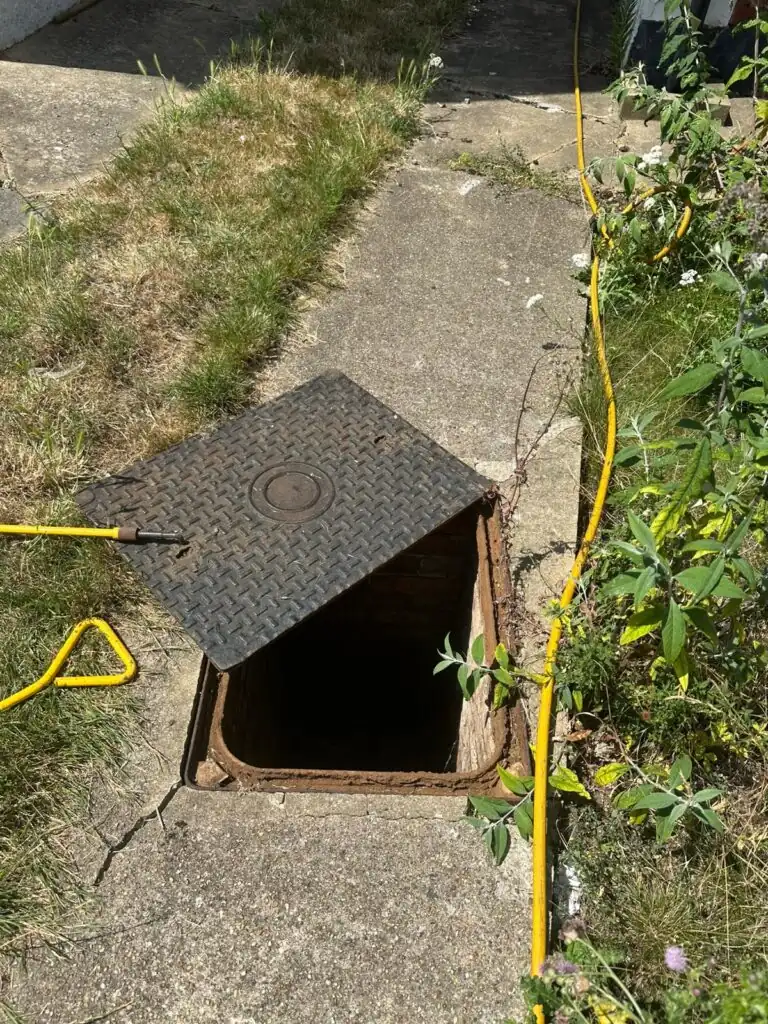
- Lift an inspection chamber cover to see whether it is full or empty, without climbing in or leaning over the opening.
Avoid
- Never mix chemical drain cleaners or use one after another; they can react and release harmful fumes or heat.
- Don’t pour caustic soda or drain cleaner into a toilet or a manhole.
- Never climb into a manhole or inspection chamber; they can contain harmful gases.
- Don’t use a domestic pressure washer in a drain; it can pack the blockage tighter and spray contaminated water back at you.
- Don’t keep flushing a blocked toilet to “push it through”.
Call a professional straight away if
- Sewage or dirty water is coming up into a shower, bath, toilet or floor drain.
- A manhole or outside gully is overflowing.
- Two or more fittings are blocked or slow at the same time.
- The same drain keeps blocking every few weeks.
- There is a lasting sewage smell inside or around the property.
Who is responsible for a blocked drain in London: me or Thames Water?
You are usually responsible for drains that serve only your property and sit within your boundary, while Thames Water is generally responsible for shared drains and anything beyond your boundary. Since 1 October 2011, shared private sewers and lateral drains across London transferred to Thames Water, the sewerage company for all of Greater London.
In practice, this means:
- Your responsibility: the internal waste pipes, soil stack, gullies and underground drain that carry only your household’s waste, up to your boundary.
- Usually Thames Water’s: a lateral drain outside your boundary, and any drain shared with neighbours, even if it runs under your garden.
- Rented homes: the landlord is usually responsible for the drains, but a tenant may have to pay for a blockage they caused, such as wipes or fat. Check your tenancy agreement.
Lifting inspection chamber covers often shows where the problem is. If your chamber is full but the next one downstream is empty, the blockage is between them. In terraces in places like Islington and Lambeth, drains are often shared, so the answer is not always obvious. Our engineers can locate the blockage, sometimes with a camera, so you know who should deal with it. For more detail, read who is responsible for a blocked drain in London and landlord or tenant: who pays.
Is a blocked drain an emergency?
A blocked drain is an emergency when sewage is coming into your home, a toilet is overflowing and you have no other working toilet, or wastewater is flooding a garden, basement or neighbouring property. In those cases, stop using water, keep children and pets away from any sewage and call 0800 470 0946 straight away.
Basement and lower-ground-floor flats, common in older terraces in Camden, Westminster and Wandsworth, are often the first place backed-up water appears, because they sit at the lowest point. During heavy rain, an overloaded or blocked drain can push water back into these properties. Keeping gullies clear helps, and an anti-flood (non-return) valve can reduce the risk of backflow.
We offer emergency drain unblocking 24/7, including nights, weekends and bank holidays, and will get an engineer to you as quickly as possible. A slow drain with no overflow can usually wait for a booked slot, but don’t leave it too long: partial blockages tend to get worse. Our guide is a blocked drain an emergency? explains how to judge it.
Why does my drain keep blocking?
A drain that keeps blocking usually has an underlying problem in the pipe, such as root ingress, a cracked or displaced joint, a sagging section or heavy fat build-up, rather than just bad luck. Clearing the blockage restores flow, but the same fault will keep catching waste until it is dealt with.
If we unblock the same drain more than once, we will usually suggest a CCTV drain survey. The camera shows the condition of the pipe so you can decide on the right next step, whether that is regular jetting, root cutting or repair. Signs of deeper damage are covered in our guide to signs of a collapsed or broken drain.
How much does drain unblocking cost in London?
The cost of unblocking a drain in London depends on where the blockage is, how easy the drain is to reach and which method is needed, so we give you a fixed quote before any work starts. There is no call-out fee and no hidden charges.
The main things that affect the price are:
- Access: whether there is a working inspection chamber or gully nearby, or the drain is hard to reach.
- Location of the blockage: a blocked gully by the back door is usually simpler than a blockage deep in the underground drain.
- Method: rodding suits many household blockages, while fat, scale and roots may need high-pressure jetting.
- Time and severity: how compacted the blockage is and how long the drain run is.
- Whether CCTV is needed: a camera survey adds value if the drain keeps blocking or damage is suspected.
Call us to describe the problem and get a quote, or book online.
For landlords, agents and businesses
We unblock drains for landlords, letting agents, restaurants, offices and shops across London, as well as homeowners. For landlords and agents, we can attend to rented properties, clear the blockage and explain the cause, which helps when deciding whether it came from tenant misuse or the condition of the drain.
Restaurants, cafés and takeaways face frequent blockages from fat, oil and grease (FOG). High-pressure jetting removes grease build-up from kitchen drains and gullies, and regular cleaning helps prevent repeat callouts. Offices and shops can arrange work at a time that limits disruption, and because we work 24/7, we can attend outside trading hours. For larger drain runs, see our drain jetting service.
Frequently asked questions
Who unblocks drains in London 24 hours a day?
Pipe & Drain Cleaners offers 24-hour drain unblocking across all 32 London boroughs and the City of London, including weekends and bank holidays. Our trained, insured engineers clear blocked drains in London homes and businesses using rodding and high-pressure jetting. Call at any time, and you'll get a fixed quote before work starts with no call-out fee.
Is Thames Water responsible for my blocked drain?
Only if the blockage is in a shared drain or a pipe beyond your property boundary. Since October 2011, Thames Water has been responsible for shared private sewers and lateral drains across London. Drains serving only your property within your boundary are usually your responsibility, or your landlord's if you rent. Lifting manhole covers can help show where the blockage sits.
How do I unblock an outside drain?
Start by wearing thick gloves, lifting the gully grate and scooping out leaves, fat and debris into a bag. If water still won't drain, the blockage is deeper in the underground pipe and usually needs drain rods or jetting equipment. Don't pour chemicals in or use a pressure washer, and never climb into a manhole.
What should I do if my manhole is overflowing?
Stop using water in the property straight away, keep people and pets away from the area and avoid touching any sewage. An overflowing manhole means the drain downstream is blocked. Call a drainage engineer promptly; if the drain is shared or beyond your boundary, it may be Thames Water's responsibility.
What is a gully and why does it block?
A gully is the grated drain outlet outside, usually by a kitchen or bathroom wall, where waste pipes and sometimes rainwater discharge into the underground drain. It contains a water trap to stop smells. Gullies block with leaves, silt, food waste and grease from kitchen sinks, and can overflow if the drain beyond them is blocked.
Is drain rodding or jetting better?
It depends on the blockage. Rodding is quick and effective for wipes, paper and compacted debris in household drains. High-pressure jetting scours fat, scale, silt and root growth from the pipe walls, so it is better for greasy or recurring blockages. Our engineers choose the right method once they have found where the blockage is.
Do you charge a call-out fee for blocked drains?
No. We never charge a call-out fee. Our engineer finds the blockage, then gives you a fixed quote before any work starts, so you know the price in advance and there are no hidden charges. You can call at any time or book a slot online.
Why is my drain blocked again after it was cleared?
Recurring blockages usually point to a fault inside the pipe, such as tree roots, a cracked or displaced joint, a dip where waste settles, or heavy fat build-up. A CCTV drain survey can show the cause so it can be fixed properly, rather than clearing the same blockage again and again.
Helpful guides
Blocked Drains London: 24/7 Drain Unblocking: every borough
We work across all 32 London boroughs and the City of London, day and night. Choose your area or find your postcode.
- Barking and Dagenham
- Barnet
- Bexley
- Brent
- Bromley
- Camden
- City of London
- Croydon
- Ealing
- Enfield
- Greenwich
- Hackney
- Hammersmith and Fulham
- Haringey
- Harrow
- Havering
- Hillingdon
- Hounslow
- Islington
- Kensington and Chelsea
- Kingston upon Thames
- Lambeth
- Lewisham
- Merton
- Newham
- Redbridge
- Richmond upon Thames
- Southwark
- Sutton
- Tower Hamlets
- Waltham Forest
- Wandsworth
- Westminster
Blocked right now? We're open 24/7
Call free on 0800 470 0946 any time, or pick a time that suits you online.