
Quick answer
A smelly drain is most often caused by a dried-out trap letting sewer gas through, or by grease, hair and bacterial slime (biofilm) building up in the trap and pipe. Other causes are a blocked or faulty vent, a partial blockage, or a cracked or broken drain. Start by running water and cleaning the trap.
Key takeaways
- Run water in unused sinks, showers and floor drains to refill dry traps.
- Clean the trap and overflow, where grease, hair and slime build up.
- Gurgling plus smells can point to a blocked vent or a partial blockage.
- Smells outside, damp patches or rats can mean a broken drain.
- A CCTV drain survey finds hidden faults when simple fixes do not work.
Why does my drain smell?
A drain usually smells because something is letting sewer gas into the room or because waste is rotting inside the pipe. The most common causes are a dried-out trap, a build-up of grease and slime, a vent problem, a partial blockage or a damaged drain.
The good news is that most drain smells have simple causes you can check yourself. Work through them in order, starting with the easiest.
Can a dry trap make a drain smell?
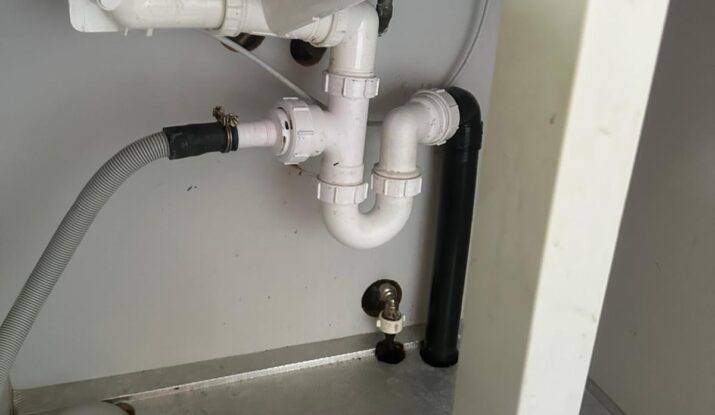
Yes, a dry trap is one of the most common reasons for a sudden sewage smell. Every sink, bath, shower and toilet has a trap, a bend that holds a small amount of water to block gas coming up from the drain. If that water evaporates, the seal is broken and drain smells come straight into the room.
Traps dry out in:
- Spare bathrooms, en suites and guest toilets that are rarely used.
- Floor drains and shower wet rooms.
- Homes that have been empty for a while, such as after a holiday or between tenants.
- Rooms with underfloor heating or warm pipes nearby.
Fix: run the tap or shower for a minute and flush any unused toilet. If the smell goes and returns after a few days, the trap may be losing water another way, such as through a leak or siphoning, which is covered below.
Can grease and gunk in the pipe cause a smell?
Yes. Grease, food waste, soap scum and hair collect in traps and pipes, and bacteria living on them form a slimy layer called biofilm. As it breaks down, it gives off a sour or rotten smell, often strongest in kitchen sinks and shower drains.
Fix:
- Wear rubber gloves and put a bowl under the sink.
- Unscrew the trap (U-bend or bottle trap), empty it into a bucket and clean it with hot soapy water and an old brush.
- Clean the overflow channel in sinks and baths, which traps slime and is often missed.
- Pull hair out of shower and bath drains with a drain hair catcher or gloved fingers.
- Refit the trap hand-tight and run water to check for leaks.
Hot (not boiling) water with washing-up liquid can help keep a pipe fresh once it is clean. Boiling water can soften plastic pipe joints. In the kitchen, wipe greasy pans with kitchen paper before washing up so less fat reaches the pipe. If the sink is also draining slowly, our blocked sink page explains the next steps.
What does it mean if my drain gurgles and smells?
A drain that gurgles and smells often has a vent problem or a partial blockage further down. Both disturb the air pressure in the pipework, which can pull water out of traps and let sewer gas in.
- Blocked vent: most houses have a soil vent pipe that runs up the outside or through the roof. If it is blocked by leaves, a bird’s nest or debris, the system cannot breathe properly.
- Faulty air admittance valve: some homes have a one-way valve, often in a loft or boxed in near the soil pipe, instead of an open vent. If it sticks open, it can let smells into the house.
- Partial blockage: a build-up of fat, wipes or roots narrows the drain so water and air struggle to pass, causing gurgling and slow draining in other fittings.
Do not climb onto the roof to check a vent pipe yourself. A drainage engineer can test the system and clear any blockage in the drain with rods or high-pressure water jetting.
Could a broken drain be causing the smell?
Yes. If the smell is outside, keeps coming back, or comes with other warning signs, the drain itself may be cracked, collapsed or have displaced joints. Waste can leak into the ground and gas can escape before it reaches the sewer.
Signs of a damaged drain include:
- A sewage smell near an outside wall, manhole or garden.
- Damp patches on walls or floors near drain runs.
- Rats in the garden or under floors, as they can use broken drains to get in.
- Repeated blockages in the same place.
- Sunken paving or soft ground above a drain.
Many older London homes, such as the Victorian and Edwardian terraces common in Hackney and Lewisham, have clay or pitch-fibre drains. These can crack, shift or be invaded by tree roots looking for moisture, which is why a persistent smell in an older property is worth investigating.
Is the smell of sewer gas dangerous?
A faint drain smell is mainly unpleasant rather than dangerous, but a strong or persistent sewage smell should not be ignored. Sewer gas is a mix of gases, including hydrogen sulphide, which gives the familiar rotten-egg smell, and methane.
- Open windows and ventilate the room.
- If anyone feels unwell, with headaches, nausea or dizziness, get them into fresh air and seek medical advice if it does not pass.
- Never go into a manhole or inspection chamber, and do not lean in to look closely. Gases can build up in confined spaces.
- Do not use chemical drain cleaners to mask a smell, and never mix them with bleach or other products.
If you smell gas rather than drains, that is different: leave the property and call the National Gas Emergency number on 0800 111 999.
What are the fixes, in order?
The best approach is to try the simplest fixes first and move on only if the smell remains. This order solves most drain smells in a home.
- Run water in every sink, shower, bath and floor drain, and flush unused toilets.
- Clean traps, overflows and plugholes to remove grease, hair and biofilm.
- Check the washing machine and dishwasher waste hoses are connected properly and not sitting loose in the pipe.
- Check the toilet seal. A smell around the base of the toilet can mean the pan connector seal is leaking.
- Lift the outside manhole cover carefully and look. If it is full, the drain is blocked.
- Get the drain cleared by rodding or jetting if there is a blockage.
- Book a CCTV drain survey if the smell continues after cleaning and clearing.
When should I get a CCTV drain survey?
Get a CCTV drain survey when the smell keeps coming back, you see signs of a damaged drain, or you have tried the simple fixes without success. A camera is passed through the pipe and records video of the inside, showing cracks, root ingress, collapses, displaced joints and blockages.
It means the right repair can be planned instead of guessing. Our CCTV drain surveys are also useful if you are buying an older home. Where a blockage or grease build-up is found, our blocked drains and drain jetting services can clear it.
Need help with a smelly drain?
If the smell will not go away, Pipe & Drain Cleaners can find the cause and fix it anywhere in London. Call 0800 470 0946 24/7, or book a time slot online. You will get a fixed quote before any work starts.
Frequently asked questions
Why does my bathroom smell like sewage only sometimes?
A smell that comes and goes is often caused by traps losing their water seal at certain times, for example when a large volume of water drains elsewhere and siphons a trap, or in warm weather when traps evaporate faster. A partially blocked vent or drain can also make it worse when lots of water is being used.
Why does my kitchen sink smell even though it drains fine?
A kitchen sink can drain normally and still smell because of grease and food slime coating the trap, overflow and pipe walls. Bacteria feeding on it release sour or rotten odours. Take the trap off and clean it, scrub the overflow, and stop fat going down the sink. If the smell persists, the pipe beyond the trap may need cleaning.
Does bicarbonate of soda and vinegar fix a smelly drain?
Bicarbonate of soda and vinegar can freshen a drain slightly, but it will not remove a real build-up of grease or clear a blockage. Physically cleaning the trap and overflow does much more. If the smell comes from a dry trap, vent problem or broken pipe, home remedies will not solve it.
Why does my drain smell worse in hot weather?
Warm weather speeds up the bacteria breaking down waste in pipes, so smells get stronger. Heat also makes the water in traps evaporate faster, especially in rarely used rooms, which can break the seal against sewer gas. Running water regularly and keeping traps clean usually helps.
Who is responsible for a smelly drain outside my house?
If the smell comes from a drain that serves only your property and is within your boundary, it is generally your responsibility. Shared drains and lateral drains beyond your boundary have generally been the water company's since 2011, which in London is Thames Water. If you rent, report it to your landlord, who is usually responsible for drain repairs.
Need a drain engineer in London?
Call free on 0800 470 0946 any time, or pick a time that suits you online.