
Quick answer
Tree roots get into drains through cracks and loose joints, attracted by moisture inside the pipe. Signs include slow drainage, repeated blockages and gurgling. Roots are usually removed with mechanical root cutters or high-pressure jetting, then checked with a CCTV camera. Because the cracks remain, roots often regrow unless the pipe is relined or repaired.
Key takeaways
- Roots enter drains through cracks and joints, not by breaking sound pipes.
- Older clay drains, common in London homes, are the most vulnerable.
- Roots are cut out with mechanical cutters or high-pressure jetting.
- Roots usually return unless the damaged joints are sealed or repaired.
- A CCTV drain survey confirms root ingress and checks the pipe after cutting.
How do tree roots get into drains?
Tree roots get into drains through small cracks, gaps and loose joints, drawn by the water and nutrients inside the pipe. Once a fine root finds its way in, it grows quickly in the damp, nutrient-rich conditions and can spread into a dense mat that catches waste.
Roots rarely break into a sound, well-sealed pipe on their own. They exploit weaknesses that are already there, then make them worse as they thicken and push joints further apart.
Why are London drains so prone to root ingress?
Many London homes have older drains and plenty of trees nearby, which is a combination that suits roots. The main factors are:
- Clay pipes. Victorian and Edwardian houses often still have their original clay drains, made from short sections with joints every metre or so. Old mortar joints can crack and open up over time.
- Street trees. London’s streets are lined with trees, including London planes, and their roots can spread a long way under pavements and front gardens.
- Garden trees and shrubs. Willows, poplars and other large, thirsty trees planted close to a house can send roots towards drains.
- Clay soil. Much of London sits on clay that shrinks in dry weather. Roots search harder for water in dry summers, and ground movement can open joints further.
- Shallow drains. Drains near the surface are within easy reach of root systems.
What are the signs of tree roots in drains?
The early signs are similar to a normal blockage, which is why root ingress often goes unnoticed for a while. Look out for:
- Sinks, baths and toilets draining slowly, often across several fittings.
- Blockages that keep coming back soon after being cleared.
- Gurgling noises from plugholes or toilets.
- Sewage smells near inspection chambers or outside walls.
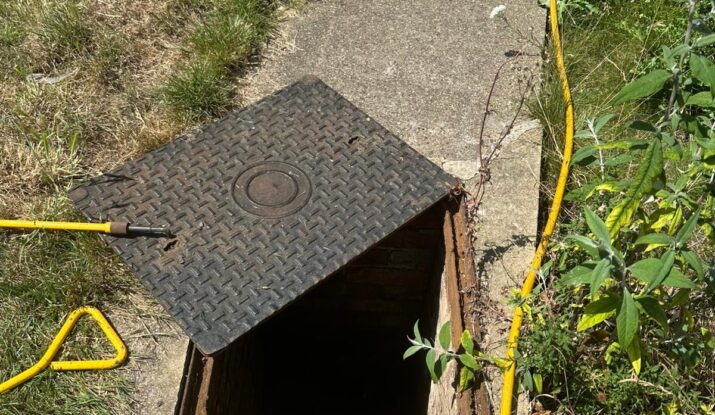
- Root fibres visible in an inspection chamber when you lift the cover (wear gloves and never climb in).
- Damp ground, sunken paving or cracks in paths near a tree and along the line of the drain.
A large tree close to your drains plus repeated blockages is a strong hint. The only way to confirm it is to look inside the pipe.
How is root ingress confirmed?
A CCTV drain survey is the standard way to confirm roots in a drain. A camera is fed through the pipe and records where roots are entering, how dense they are and what condition the joints are in.
This matters because it shows whether you are dealing with a few fine roots at one joint or heavy growth along a whole run, and whether the pipe itself is cracked, displaced or deformed. That in turn decides the right fix.
How are tree roots removed from drains?
Roots are usually removed from inside the pipe without digging. The two main methods are:
- Mechanical root cutting. A rotating cutting head on a flexible cable or rod is fed into the drain and cuts through the roots, clearing the pipe back to its full width.
- High-pressure water jetting. A jetting hose with a specialist nozzle uses powerful jets of water to cut through finer roots and flush away debris. Jetting is also used after cutting to wash out the cut root material. You can read more about drain jetting here.
After cutting, a second camera pass checks that the roots have gone and shows the condition of the joints underneath, which are often damaged.
Why do tree roots come back?
Roots usually come back because cutting removes the growth inside the pipe but doesn’t fix the gap they came through. The tree is still there, the crack or open joint is still there, and the pipe still carries water, so new roots can find their way back in.
Cutting can also stimulate growth in some cases, much like pruning a plant above ground. That’s why root cutting on its own is often a short-term fix.
How do you stop roots getting back in?
The long-term solution is to seal the pipe so roots can’t get in. Common approaches include:
- Drain relining. After the roots are cut and the pipe cleaned, a resin liner is installed inside the drain, sealing cracks and joints without digging.
- Patch repairs. If roots are getting in at one or two joints, a short internal patch can seal just those points.
- Excavation and replacement. If a section is badly broken or collapsed, it may need to be dug out and replaced with modern pipe.
- Regular maintenance. Where repair isn’t possible straight away, periodic root cutting and jetting can keep the drain flowing in the meantime.
Can I prevent root problems in the first place?
You can reduce the risk, especially if you are planting or planning work. Avoid planting large, thirsty trees close to drains and the house, keep an eye on drains near mature trees, and deal with slow drainage early rather than waiting for a full blockage.
Don’t remove or cut back a tree without checking first. Trees in conservation areas or covered by a Tree Preservation Order need council consent for most work, and street trees are normally managed by the local council. If you believe a council tree’s roots have damaged your drain, contact the council with your survey evidence.
Who is responsible if roots block a shared drain?
If roots are in a drain that serves only your property within your boundary, it is usually your responsibility. If they are in a shared drain or in the section beyond your boundary, it is generally Thames Water’s responsibility following the 2011 private sewer transfer. A CCTV survey can show where the roots are.
Think you have roots in your drains?
Pipe & Drain Cleaners can survey, cut and jet root-blocked drains across London, including tree-lined areas such as Richmond upon Thames and Barnet. If your drain is blocked now, see our blocked drains service. We give a fixed quote before any work starts. Call 0800 470 0946 24/7 or book online.
Frequently asked questions
Can tree roots break a drain pipe?
Roots usually exploit existing cracks and joints rather than breaking a sound pipe. Once inside, though, they thicken as they grow and can widen cracks, push joints apart and, over time, contribute to a pipe fracturing or collapsing. Older clay and pitch-fibre drains are most at risk, while modern sealed plastic pipes are much more resistant.
Should I use a chemical root killer in my drain?
It is better to have roots cut out mechanically and checked by camera. Chemical products don't repair the crack the roots came through, may not clear a dense root mass and can harm the tree or the wider environment. Never mix drain chemicals. If you choose a product, follow the label exactly and wear gloves.
How close to a drain can I plant a tree?
There is no single safe distance, because it depends on the species, its eventual size and your soil. Large, water-hungry trees such as willows and poplars are best kept well away from drains and buildings. Smaller shrubs pose less risk. If you're unsure, check with a tree specialist before planting near a drain run.
Who pays if a council street tree's roots damage my drain?
It depends on where the damage is and the circumstances. If the roots are in a shared drain or the section beyond your boundary, it is generally Thames Water's problem. If a council tree has damaged your private drain, you can contact the council with CCTV evidence, but each claim is assessed individually.
How often do roots need cutting out of a drain?
It varies with the tree, the season and how damaged the pipe is. Some drains stay clear for a long time after cutting, while others block again fairly quickly. If roots keep returning, it is usually more effective to seal the pipe with relining or a repair than to keep cutting.
Need a drain engineer in London?
Call free on 0800 470 0946 any time, or pick a time that suits you online.